
Wood Protection Against Sun and Moisture
Deck Staining in Beachwood for outdoor living spaces showing weathered gray wood, splintering surfaces, or faded color
Unprotected wood decking deteriorates rapidly under constant sun exposure and seasonal moisture that cause surface fibers to break down and split. All Seasons Painting & Powerwashing provides deck staining throughout Beachwood for platforms that have lost their protective finish and now show gray discoloration, rough texture, or water absorption when it rains. Proper stain application restores natural wood beauty while creating a barrier against UV radiation and moisture penetration that otherwise lead to rotting, warping, and structural weakness over time.
Deck preparation involves thorough cleaning to remove dirt, mildew, and weathered wood fibers, followed by surface inspection to identify loose boards or protruding fasteners that need attention before staining begins. Quality stains penetrate wood grain rather than sitting on the surface like paint, allowing the finish to move with natural wood expansion and contraction through temperature and humidity changes without peeling or blistering.
Request a free deck staining estimate to evaluate current wood condition and determine appropriate product selection for your outdoor space.
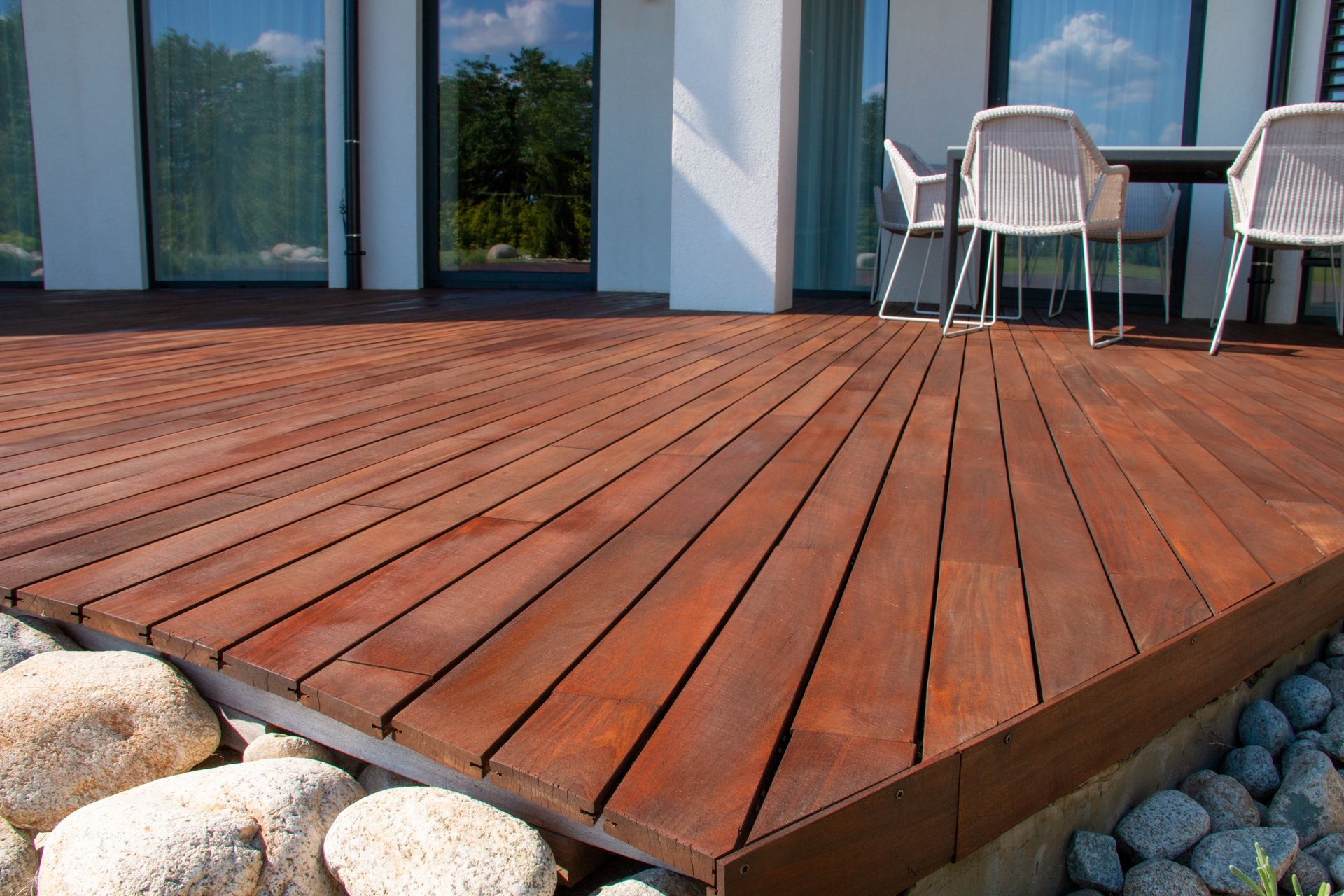
Deck staining brings back the rich tones and visible grain patterns that new wood displays before weathering turns surfaces gray and lifeless. Transparent stains show maximum grain detail while offering less UV protection, semi-transparent stains balance appearance and protection, and solid-color stains provide the longest-lasting defense against sun damage while hiding more wood character. Properly stained decks shed water instead of absorbing it, which prevents the moisture-related swelling and fungi growth that cause premature board failure.
After professional staining, deck boards show consistent color without lap marks or puddles where excess product pooled in low spots, and the surface feels smooth underfoot rather than rough with raised grain. Water beads up and rolls off rather than soaking in immediately, and regular foot traffic no longer picks up splinters from deteriorating surface fibers. Stained decks require periodic recoating every two to four years depending on sun exposure and product type, but this maintenance prevents the complete stripping and heavy sanding needed when wood goes too long without protection.
Deck staining enhances appearance and extends wood life but cannot reverse advanced rot or structural damage, which requires board replacement before finishing work begins. Stain performance depends heavily on surface preparation quality, as contaminants or moisture in wood at application time prevent proper penetration and lead to early finish failure regardless of product quality.
What Property Owners Usually Ask
Homeowners considering deck staining want to understand preparation requirements, product differences, and maintenance expectations for outdoor wood surfaces.
What preparation happens before stain application?
Decks get power washed to remove dirt and mildew, then allowed to dry completely before staining, and any raised grain gets lightly sanded to create a smooth surface that accepts stain evenly.
How do transparent and solid stains differ?
Transparent stains penetrate deeply to show full wood grain while offering one to two years of protection, while solid-color stains contain more pigment that blocks UV rays for longer durability but hides natural wood patterns.
When is the best time to stain a deck in Beachwood?
Late spring through early fall provides the warm, dry conditions needed for proper stain curing, with application best scheduled during stretches of dry weather when humidity stays moderate and rain is not forecast for at least 24 hours.
Why do some deck areas fade faster than others?
Surfaces in full sun receive more UV exposure that breaks down stain pigments quickly, while shaded sections under roof overhangs or trees stay protected longer and often show better color retention years after application.
What ongoing maintenance does a stained deck need?
Annual cleaning removes dirt and mildew that degrade stain finishes, and recoating becomes necessary when water stops beading on the surface or when wood begins showing gray weathering in high-traffic areas.
All Seasons Painting & Powerwashing brings extensive experience working with
residential outdoor living spaces across the region. Set up your free estimate to discuss wood condition, stain options, and the preparation steps needed to protect and beautify your deck investment.